
Home
Abnormal Pap Smear
Birth Control
Irregular Periods
IUD
Menopause
Choosing a Menopause Specialist
Lichen Sclerosus
Vulvodynia
Vulvar / Vaginal Dermatology
Painful Intercourse
Surgical Services
Urgent Women’s Care
Gynecologic Surgery
Immediate Care Symptoms
Robotic Surgery
LEEP
Laparoscopic Uterine Surgery
Hysteroscopy
Hysterectomy
Surgical Vaginal Rejuvenation
Non-Surgical Vaginal Rejuvenation
Hymenoplasty
Vaginal PRP Injection
Labiaplasty
Perineoplasty
Clitoral Surgery
Annandale Office
4208 Evergreen Lane, Suite 213
Annandale, VA 22003
Alexandria Office
5148 Leesburg Pike
Alexandria, VA 22302
Falls Church Office
7655 Leesburg Pike
Falls Church, VA 22043
Fairfax Office
3925 Blenheim Blvd, Unit 52 #C/D
Fairfax, VA 22030
Merrifield Office
2810 Old Lee Hwy STE 305
Fairfax, VA 22031
Reston Office
1892 Preston White Dr, Ste 201
Reston, VA 20191

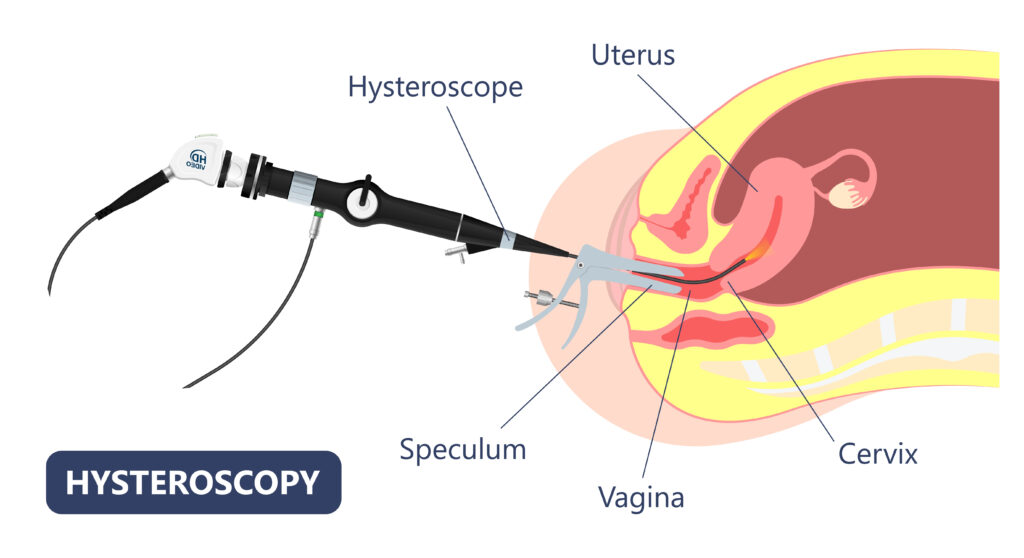
A hysteroscopy is a procedure used to examine the inside of the womb (uterus). It’s carried out using a hysteroscope, which is a narrow telescope with a light and camera at the end. Images are sent to a monitor so your doctor or specialist nurse can see inside your womb. The hysteroscope is passed into your womb through your vagina and cervix (entrance to the womb), which means no cuts need to be made in your skin.When a hysteroscopy may be carried out A hysteroscopy can be used to: investigate symptoms or problems – such as heavy periods, unusual vaginal bleeding, postmenopausal bleeding, pelvic pain, repeated miscarriages or difficulty getting pregnant diagnose conditions – such as fibroids and polyps (non-cancerous growths in the womb) treat conditions and problems – such as removing fibroids, polyps, displaced intrauterine devices (IUDs) and intrauterine adhesions (scar tissue that causes absent periods and reduced fertility) A procedure called dilatation and curettage (D&C) used to be commonly used to examine the womb and remove abnormal growths, but nowadays hysteroscopies are carried out instead.